
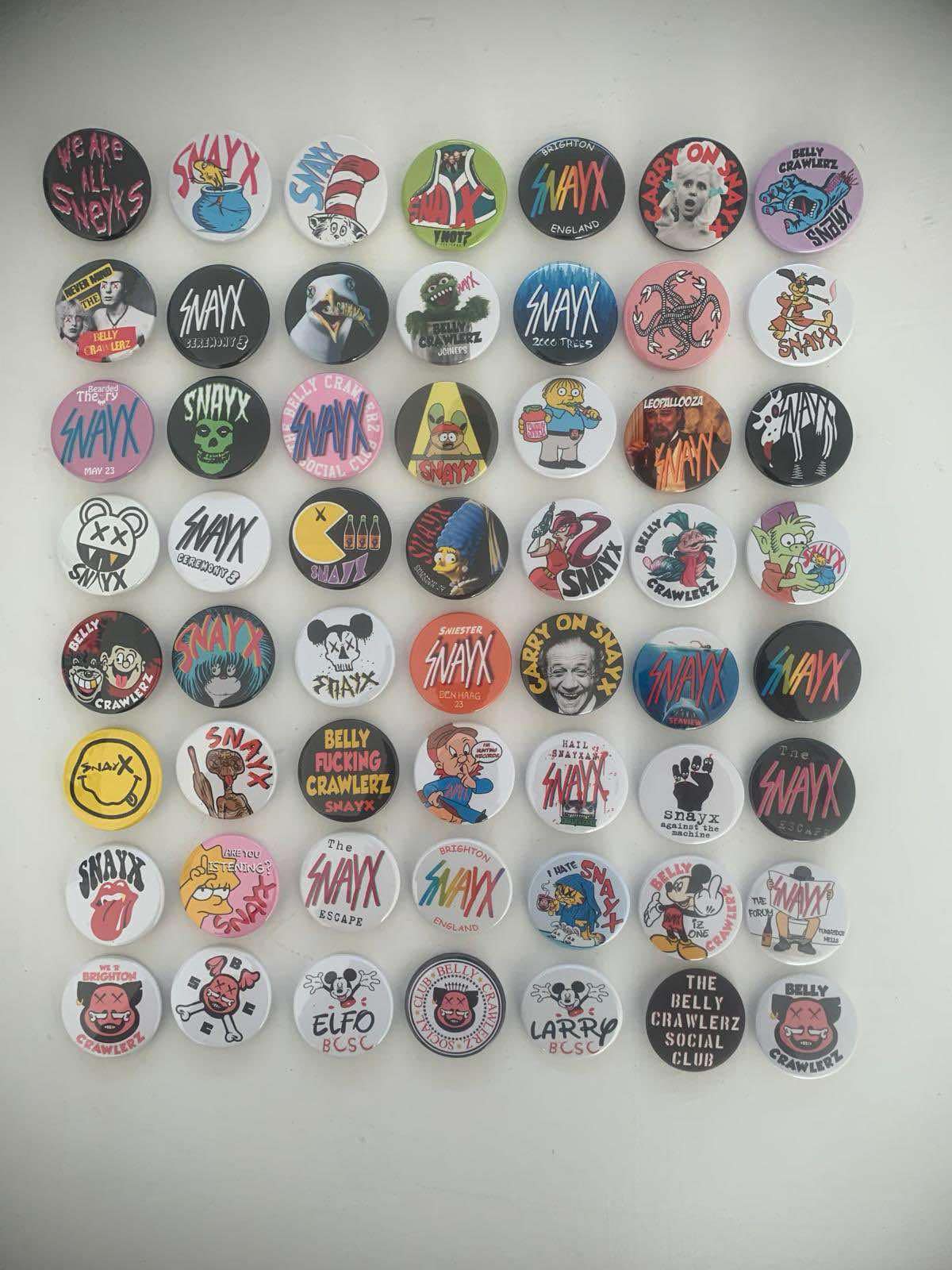
Meet Larry and Patrick, two friends who started making badges for locals bands in Brighton. However this is quickly growing, diversifying into producing other merch such as tote bags, mugs and coasters for bands further afield. This is their story to date.
How did you start producing band badges?
It started with wanting to do a Belly Crawlerz (Snayx Facebook Fangroup) badge. The first ones that we did Gilly (a friend) made them for us and they went down so well, people just absolutely loved them. Then the band were playing some festivals so we thought let’s do some more. And it just kind of went from there. One minute we hadn’t made any badges. The next minute we’d made hundreds! It just took off, and then it became almost an obsession for people, desperate to get hold of one of these badges for each of the shows. For the last Snayx tour of 10 shows, we made 60 for each show and gave them all away. And then we’ve just a badge pack with the full set of badges and a tea towel and sold those through Belly Crawlerz.
At what point did you realise you were onto something and you started to buy the kit so you could do it yourself?
It was great doing it with Gilly, but everything takes time, and then you’re paying for postage on top so it makes it a lot more expensive. We started looking at the costs of buying the equipment so we could do it to order ourselves. It just made sense to go and buy the equipment. We’ve probably made at least 10,000 badges so far.
And has it just been for Snayx, or for other bands too?
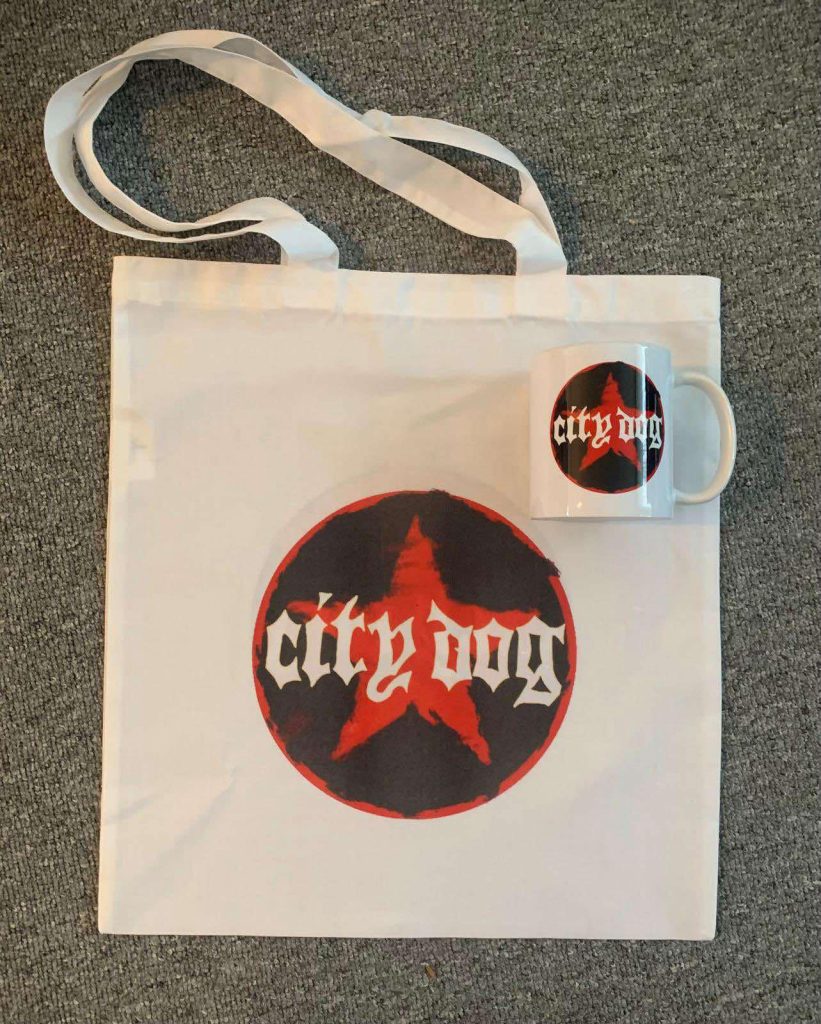
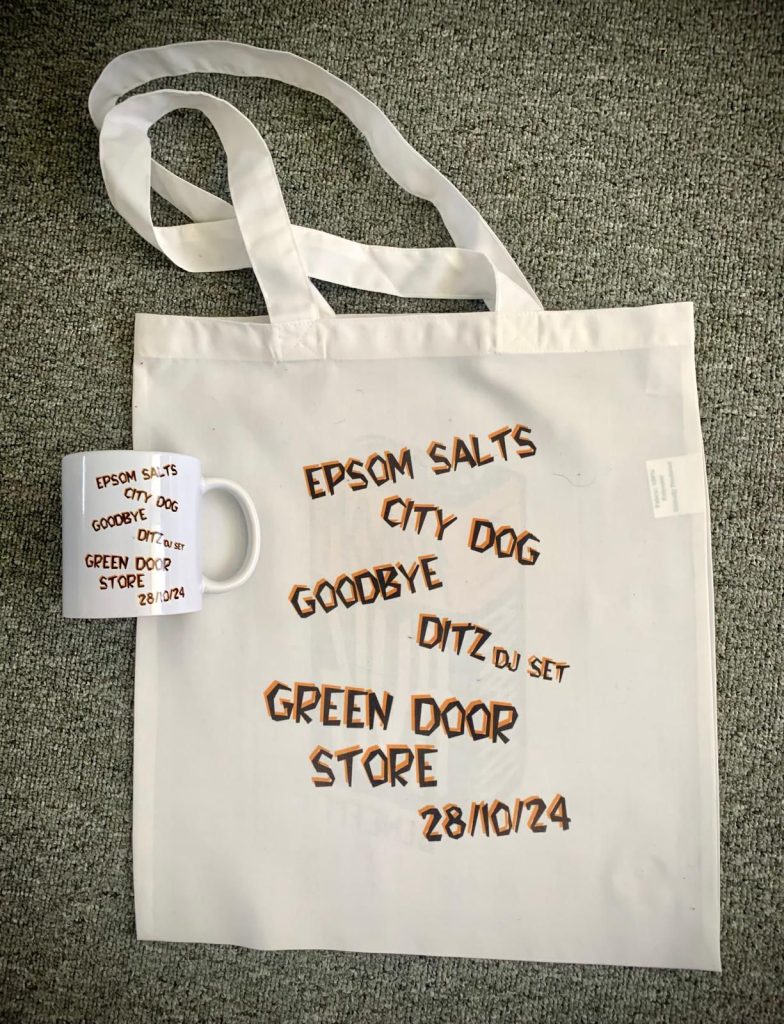
We’ve done some stuff for Monakis, Electric Cowboy Club, and we made some badges for the Ditz fan group and the deadletter fan group as well. And we just done some for City Dog. They’re on tour at the moment so we made some badges, and we’ve some merch for them as well.
What is your view going forward? Because I know you have an idea that you want to help some of the bands that are maybe too small to be able to order their own merch, and you’re a more cost effective way for some of these bands. Is that, right?
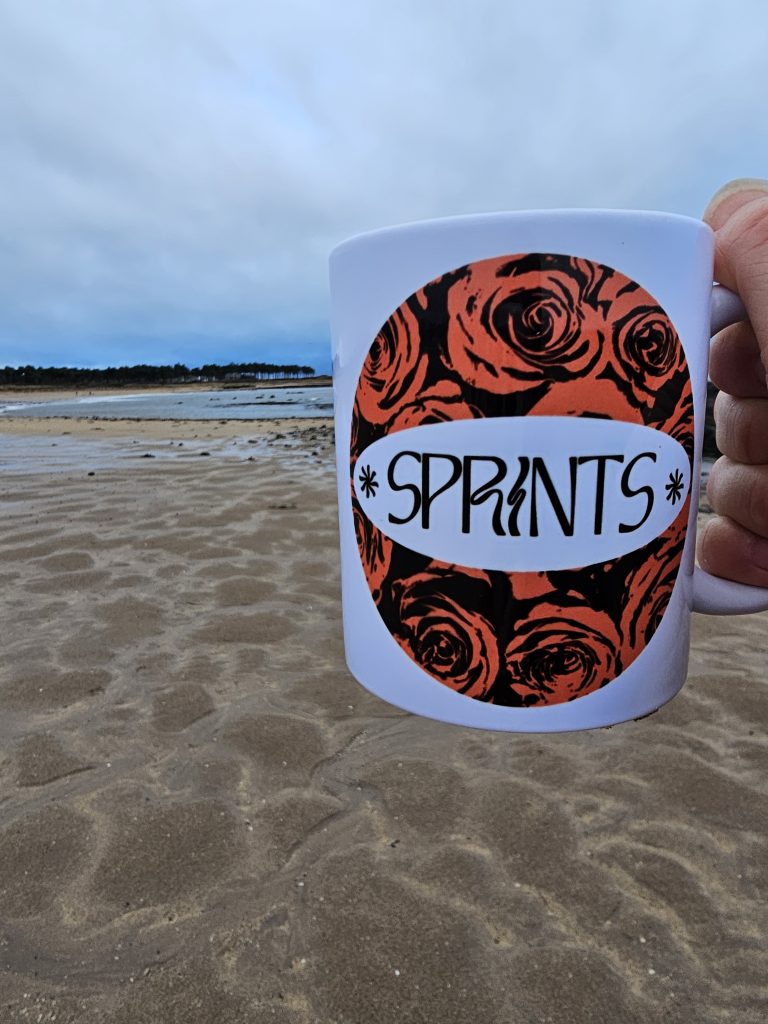
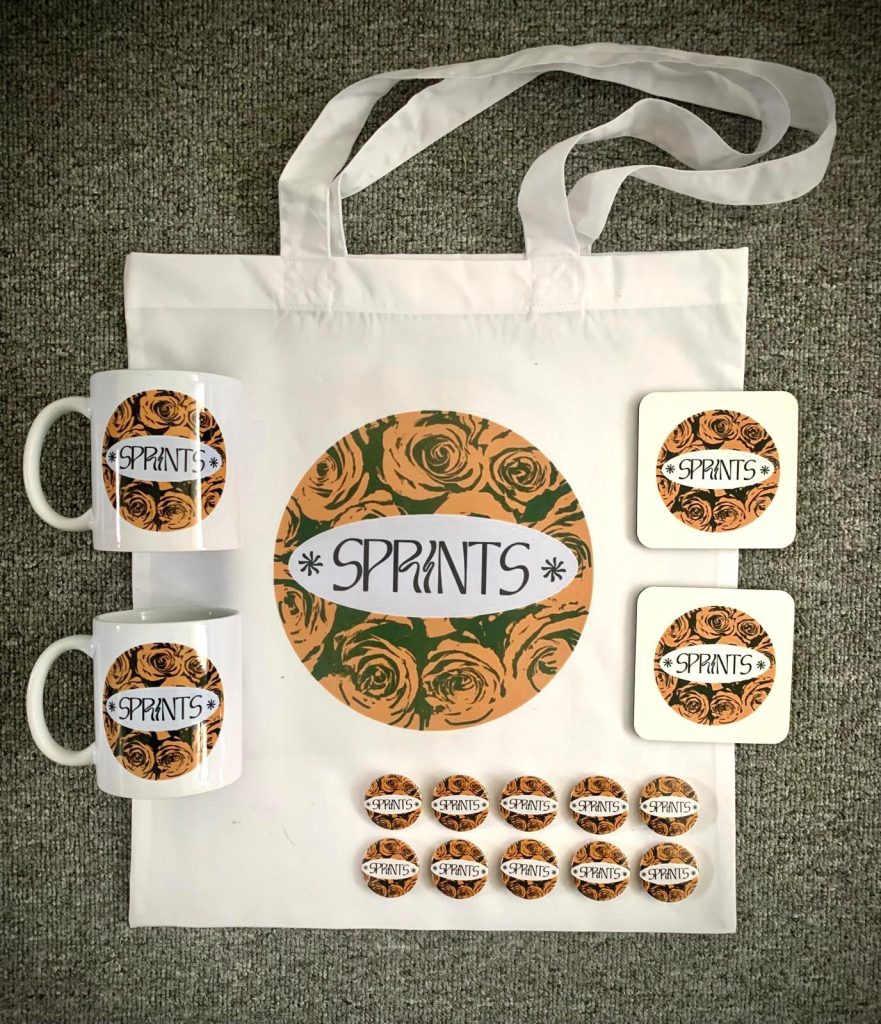
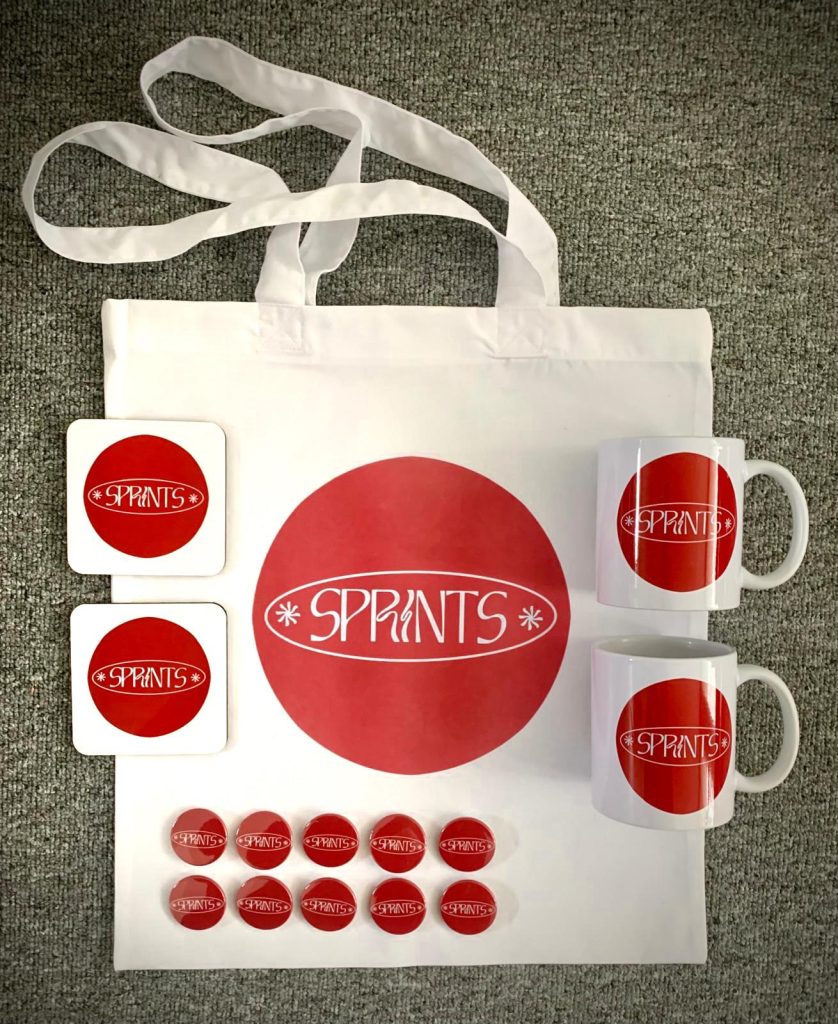
We bought a load of sublimation equipment. We bought a sublimation printer, a mug press, and heat press, and we’re just about to get a hat press and a cutting machine as well, so we can actually cut out the heat transfer material which is a bit better quality than just the sublimation printing. We bought all this equipment with the idea that if we produce the mugs and the tote bags and the posters and hats, we can say to bands this is what we can do. Normally we make a sample to show people. Then the deal is if they want to go ahead and then sell these, and split the money with us, then we’ll take out of our half the cost of the materials, time and labour involved. As it works out, the bands end up making more out of it than than we do. It’s not really a money making thing, we’re trying to help bands, but our plan is to keep ploughing everything back in and try to get it to a point where we can afford a direct to garment printer, so that we can start to do t shirts as well. The size of the bands that we’re working with are really small. If we can make say 10 tote bags and 10 mugs i.e. really small runs at the moment, that gives them an income. It’s all a learning curve for us as well. Some of the bands we’re doing the artwork and others are using their artwork, and but it’s learning as we go along as well.
The other side of the whole thing is that I’ve been running a street art project in West Africa for a number of years, and we’re trying to do a tree planting exercise as well. Every time that we sell something with a band, we want to plant a tree in Africa. So that comes out of the money that we make. If we make £10 out of something, we pay for all of the materials and all of the workmanship and everything, plus we then pay to have to get a tree planted in Africa. So we’re hoping that when these bands go on and do big things, we’re not trying to say, Okay, we want to be running all the merch. But they still support the project and believe in what we’re doing, we’re hoping that maybe they’ll just let us have a mug for sale on their merch stand for example that still supports the project. As these bands get bigger, obviously there’ll be more focus on them, and hopefully it will bring more focus into into what we’re trying to do in Africa as well. Hopefully we’d really love to do work with Grassroots Music Venues too. So we’re trying to work with not just bands, but also different people that all come together to make the gigs work.
You’ve started off with the badges, but the possibilities are endless! And it’s just two of you.
We’re not trying to become some big company. We want to keep it as grassroots as possible, and let it grow organically at its own pace. Let the actual demand dictate. I don’t want it to be seen like we’re being too pushy or trying to take over anything, because that’s really not it. It’s trying to help with some merch that maybe they wouldn’t have thought about doing before, or maybe doing something that doesn’t clash with what they already have. For example we’re experimenting with some dog tags for City Dog like the American GI dog tags. We’re just trying to do things that are a little bit different. With the Snayx tour obviously we didn’t want to do anything that that they already had on the band’s merch, we wanted to do things that weren’t available. So did some water bottles and coasters which went down a treat!
The other thing is things are tough for people at the moment. And so we’re selling coasters for four pounds, and they’re really good quality. It’s great that people can go to a gig and for a fiver they could buy a badge and and a coaster. It’s not having these stupidly expensive items on a merch table that people look at and go, “Oh, I wish I could have something from here, but I just can’t afford anything”. It’s about doing something that is good for these young bands, but also good for people that are going. They can go home with something to remember the gig.


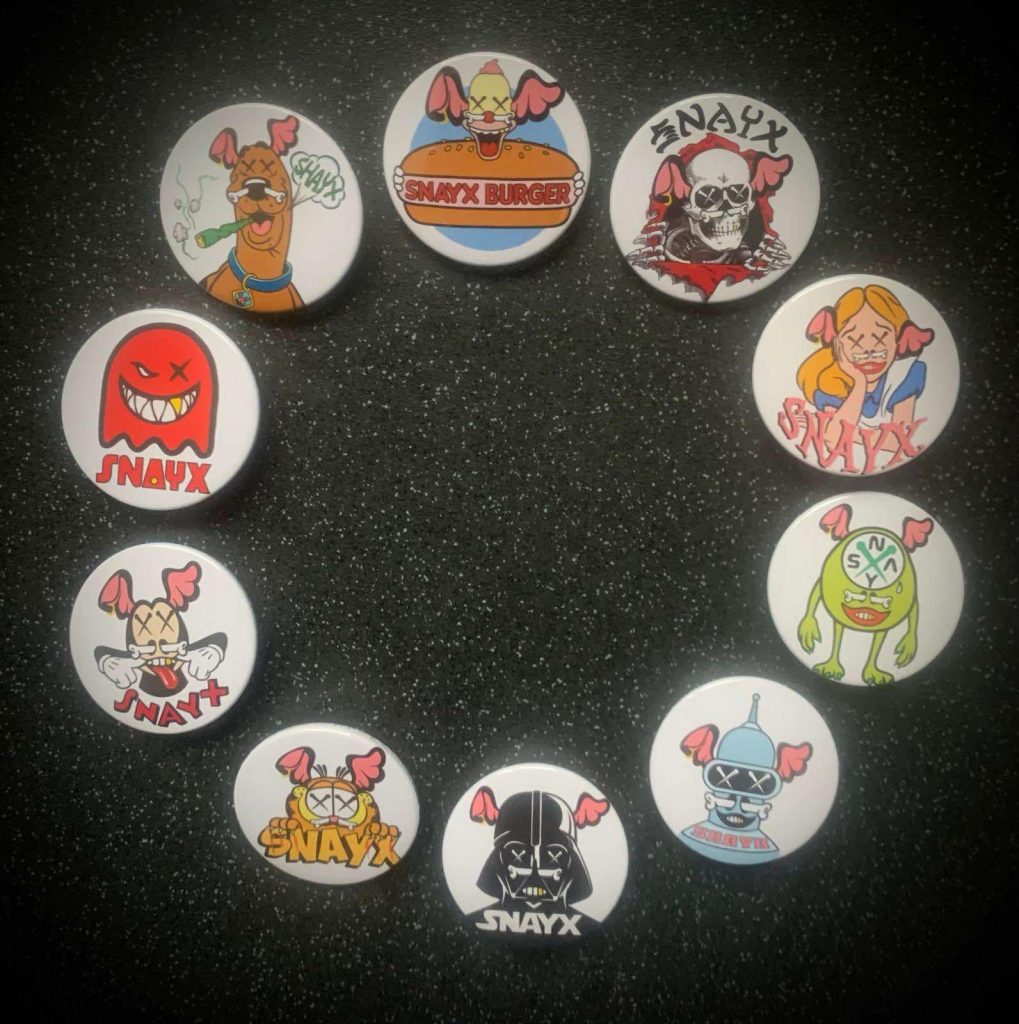
In some ways, that’s where the fan groups can be a good start. Badges are something some of these bands haven’t had before.
People love a badge, it’s crazy. I hadn’t realized, but there’s these old punk badge groups on Facebook where people are totally obsessed by badges from the 70’s and 80’s and they’ve become collectors items. I think it’s absolutely mind blowing that these little bits of metal and plastic become these little gems that people are absolutely obsessed with. I love it! It’s so much fun! When Snayx play, they have a song called ‘Fakes’, which they normally play right at the end of the show, and that’s when I go out and hand badges out to people in the audience, and people just so shocked to be given a badge. And you can just see those massive grin on their face when they see it’s a Snayx’s badge. It makes people happy.
And are you comfortable that people contact you if they’re interested, or are you a bit worried about opening the floodgates!
We’re open to anyone contacting us. But it is small numbers. What makes it more expensive is when you’ve got to start shipping things. But if somebody was for example going on tour and they were playing Brighton, then we could stop by and physically hand them over. We want it to grow, but we don’t want it to grow out of our control. At the moment it’s all done on the kitchen table. It’s quite fun that we can literally come up with a design, and then 10 minutes later, you’ve got a badge made, or you’ve got a tote bag printed. It’s great.
We had City Dog come round and they did some printing of their own stuff. And so we’re up for doing that as well, having the bands actually come in and do the printing themselves. Patrick lives in Brighton so we do it from his place. They can put that on their social media too, showing the band printing the merch themselves.
I understand you also have an eye on sustainability.
We see so many of these big bands that could be doing stuff for the environment. When a band gets huge, their carbon footprint is massive, with trucks driving the stuff around. It’s flying everywhere. It’s all an impact on the environment, and very few bands actually do something about it. We want to do something that’s more community based. It’s one thing planting trees, but if you’re doing it for a community, you want to know exactly what they want. Hopefully by the end of January 2025, we will have started our first project. We’re providing fruit trees to a school in Gambia. For the kids, if they’re going to school, and they’re planting these fruit trees, and then looking after them, they will grow together, and then when the fruit starts to come through, that will provide fruit for the school. So it’s about looking at each project, not only from a sustainability point of view, but also from a community point of view as well. What is good for that community, that individual situation. Putting the emphasis on community ownership and development means that the communities will be engaged. We saw it with the art project that I did out there. What we’re hoping to do with this first project is, as the kids are planting the trees, we want to try and do a live stream with Belly Crawlerz and have Snayx involved, and so that the kids can see where the support has come from, and the people here can see exactly where it’s going. Because with many projects you give money to charity, and it’s a big faceless organisation. But to actually be able to see the kids planting and getting involved, it’d be a fun event for everyone involved. It’s trying to look at the bigger picture, to try to use that goodwill of the people that have bought it, and then the goodwill of the people are actually planting, so linking everyone together, then people can actually say, okay, that T-shirt or mug I bought, has planted that tree and I can actually see it happening.
For more information please contact Larry at [email protected].